
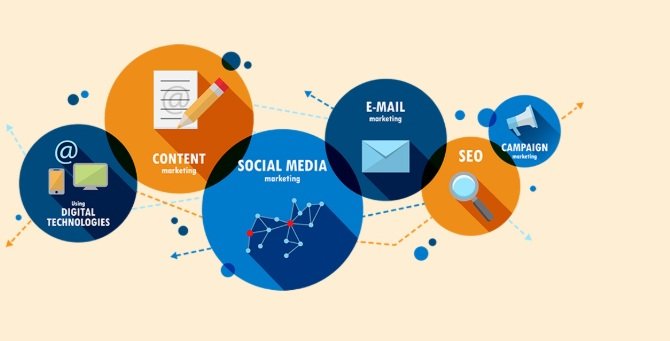
Social advertising has developed to be much further than increasing posts and crossing fingers. Modern brands are overcrowded in the digital world where generic communication does not attract or yield significant outcomes. Social advertising agencies have become a key collaborator in navigating this complexity, using advanced targeting strategies that ensure delivery of promotional content to users with the highest likelihood of engaging and converting. The way these agencies work can explain why precision targeting is now a non-negotiable item in competitive brands that want to see a quantifiable impact.
The Increasing Significance of Precision targeting in Social media advertising.
Since Social advertising agencies have become complex data ecosystems, accuracy targeting has been the foundation of successful online advertising campaigns. The brands can no longer afford to place broad nets in a hope of capturing the interested consumers.
The current advertising environment requires fine-tuning audience targeting according to demographics, actions, passions, and buying intentions. Social advertising agencies use sophisticated analytics to target and target certain consumer groups with targeted messages. This accuracy reduces wastage of ad money and increases the engagement and conversions.
Social media such as Facebook, Instagram, and LinkedIn provide strong targeting features that allow advertisers to identify audiences to the niche level of characteristics. Social advertising has moved beyond a wide awareness instrument into a performance-based media that has the potential to produce quantifiable business results due to the capacity to provide pertinent content to open-minded audiences.
The way Social Advertising Agencies can Find and Target the Right Audiences.
The identification of the audience starts with a deep data analysis, integrating the first-party, second-party, and third-party data. The social advertising agencies analyze demographic data, behavior, history of purchase, and engagement rates to create comprehensive audience profiles. They use advanced analytics and artificial intelligence to find similarities between high-value customers and prospects.
Segmentation is used to divide these audiences into particular groups basing on certain specifics like age, location, interests, levels of income and online behaviors. Agencies develop tailor audiences based on visitors to the websites, subscribers of email, and followers of social media. They also create lookalike audiences which are similar to the current customer profiles. This type of strategic segmentation allows the agencies to develop specific messages, tailored to each segment, maximizing the relevance of ads and campaign results and saving on advertisement budgets.
Ad Relevance and Performance: Improve Ads with Data Insights.
After segmentation, agencies use data insights to enhance the targeting parameters and creative details that can lead to specific changes in the performance of the campaign. With the help of engagement data, click-through, and conversion data, agencies can determine what messages appeal to particular audience segments. This intelligence will guide recurrent testing of ad copy, images and call-to-action buttons.
Behavioral cues such as time on content, scroll depth, and pattern of interaction are also followed by agencies to maximize the placement and timing of the ad. Real time performance dashboards allow rapid changes to be made on campaigns that are not performing, shifting budget to high converting segments.
Advanced attribution modeling enables agencies to see the customer experience in touchpoints, and which ads are most helpful in converting. These are the data-driven insights that ensure that brands can get the most out of ad spend and offer more and more relevant data to their target audiences.
Production of Interactive Ad Contents that will appeal to a certain group of users.
Effective social advertising agencies create advertisement messages that are based on their individual motivations, pain points, and preferences of each user group that they serve. These agencies do not formulate generic messages but come up with various versions of ads, which address unique audience attributes like age, locality, interests, and buying habits.
As an example, a fitness company could present weight loss outcomes to health conscious consumers and athletic performance to competitive athletes. Agencies experiment with various visual designs, messaging tones, and calls-to-action in order to identify which one appeals to each segment.
This customization goes to cultural specificities, platform-based formats and even time-based contextualities. The agencies match the creative aspects and expectations of the audience and their needs, leading to higher engagement rates, lower ad fatigue, and resulting in higher conversion rates across campaigns.
How to maximize Budgets and Bidding Strategies to achieve a better ROI.
By distributing budgets strategically based on real-time performance data, social advertising agencies ensure they maximize the performance of their campaigns by allocating their budgets across platform, audiences and advertising locations. They also have advanced bidding approaches that strike a balance between cost and campaign goals, be it impressions, clicks, conversions or brand awareness.
Such agencies constantly track cost-per-acquisition ratios and dynamically optimise bids in order to take advantage of good performing areas and minimise expenditure in areas performing poorly. They also take advantage of automated bidding and manual optimization to ensure competitive positioning in ad auctions without breaking the bank.
A/B Testing, Analytics, and Optimization of Campaigns.
Effective social advertising is based on systematic experimentation and refinement of data. To test the creative variations and audience groups, social advertising agencies use A/B testing protocols to test the message approaches. They compare such metrics as click-through rates, conversion rates, cost per acquisition, and engagement patterns to define the most effective ones. These agencies use state-of-the-art analytics systems to monitor touchpoints of customer journeys and attribution techniques. Live performance tracking can help to make immediate changes to the campaigns that are not performing as expected, shifting the resources to those that have a high impact.
The agencies create testing structures, which test ad formats, placement options, and timing variables. Continuous optimization is a process of continuous improvement based on the insights of the data. Agencies optimize targeting settings, bid strategies, and update creative resources to fight ad fatigue. This is a cyclic process that ensures that campaigns are updated as audience behavior and platform algorithms evolve, ensuring that the ad is as effective as possible.
Combining Social Advertising into More Wide-Ranging Digital Marketing.
Contemporary social advertising agencies understand that disconnected campaigns can only have reduced returns, in contrast to integrated campaigns. Through these agencies, social ads are aligned with email marketing, content strategies, and search engine campaigns to develop consistent customer experiences that touch multiple touchpoints.
Integration allows delivery of uniform messaging and exploit the advantages of each channel. Awareness/engagement is achieved on social platforms, high intent users are captured via search, and leads are nurtured via email through personalized sequences.
The agencies align the timing, creative assets, and audience data across these channels to enhance impact. Cross-channel attribution models are used to assist the agencies to determine the effect of social advertising on the conversions that may be made via other mediums. This integrated picture does not allow misallocating budget and shows the synergies among the platforms.
Developing Long-Term Brand Recognition by means of regular interaction with the audience.
Why is it that certain brands have continued to be visible whereas others just become forgotten despite the large amounts of money spent on advertising. The difference is in regular interest of the audience and not in occasional campaign flurries.
Social advertising agencies develop long-term engagement frameworks that nurture brand awareness through regular touchpoints. They establish content calendars aligning with audience behaviors, ensuring brands remain present without overwhelming followers.
Agencies analyze engagement metrics to refine messaging frequency and timing. Sequential storytelling builds recognition over time. Agencies create narrative arcs spanning multiple campaigns, allowing audiences to develop familiarity with brand values and positioning. This approach transforms casual viewers into invested community members.
Retargeting strategies reinforce brand recall by re-engaging previous interactors with evolved messaging. Combined with audience segmentation, these efforts compound awareness incrementally, establishing brands as category fixtures rather than temporary presences.