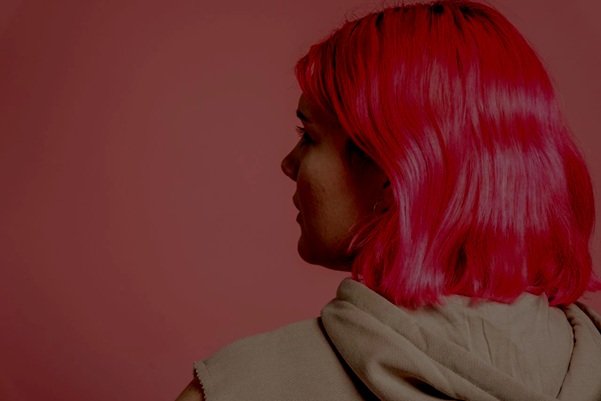
Deciding to change your hair color without knowing how it’ll actually look on you is a genuinely stressful gamble. The difference between imagining yourself as a redhead and seeing yourself as one — in your own face, with your own skin tone and features — is significant enough to change the decision entirely. Digital hair color preview has become a practical tool for exactly this reason, and the quality of results available now makes it worth taking seriously.
Using a reliable hair color changer editor that produces realistic results rather than obvious overlays gives you genuinely useful information before you commit to anything at a salon — or spend money on a color that turns out not to suit you.
What Makes a Hair Color Preview Actually Useful
A useful preview looks like a photo of you with different hair — not like a photo of you with a colored filter applied to your head. That distinction matters because the whole point is to help you make a real decision, and a preview that doesn’t look believable doesn’t help you do that.
Realistic digital hair color accounts for how light interacts with hair — the way highlights catch at the crown, how shadow pools at the roots, how individual strands vary in tone. Flat color overlays ignore all of this and produce results that look obviously digital, which makes them useless as decision-making tools regardless of how fast they are to generate.
The Limitation of One-Tap Color Tools
Automated hair color changers have a consistent set of problems that appear predictably across different photos and different tools. Edge detection — identifying exactly where hair ends and skin or background begins — is technically difficult, and most automated tools get it wrong often enough to produce visible artifacts: color bleeding onto the forehead or ears, uncolored strands near the face, or a selection boundary that’s visibly artificial.
Beyond edges, the tonal rendering is the bigger issue. Real hair color isn’t uniform. A natural brunette has warm and cool tones distributed throughout, with lighter pieces framing the face and darker depth underneath. An automated tool that applies a single color value across the entire hair region produces something that looks synthetic regardless of which color is chosen.
Human Retouching for Hair Color: Why It’s Different
RetouchMe handles hair color editing through professional retouchers who work on each photo manually. This means the color is applied with awareness of the existing light and shadow in the photo, individual strand variation is preserved, and the result integrates naturally into the image rather than sitting on top of it.
The practical difference is that the preview actually looks like you with that hair color — which is what makes it worth doing in the first place. For a decision as visible and semi-permanent as a hair color change, a preview that looks real is genuinely more useful than one that’s merely fast.
Getting the Best Result From Your Preview
The quality of a hair color preview depends partly on the photo you start with. A few things that consistently produce better results:
- Even, natural lighting — harsh shadows across the hair make accurate color rendering harder and the preview less reliable as a guide
- A photo where your natural hair color is clearly visible — heavily filtered or artificially lit photos give inaccurate starting information
- A direct or three-quarter angle — the most useful preview is one where you can clearly see how the color frames your face
- Specific color description — “copper red with golden highlights” produces a more accurate result than “red”
Taking a well-chosen photo and a clear color brief to a professional retoucher produces a preview that’s specific enough to take to a colorist as a reference. That conversation — “here’s what I want it to look like” — is worth more than any amount of verbal description, and it significantly reduces the risk of leaving the salon with something unexpected.
Also Read: